 CoachPro Tools
There is a very clear pattern between coaches who grow and coaches who stagnate after their first clients. It has nothing to do with their method, their training, or their credentials. The difference is more mundane and more decisive: coaches who scale have infrastructure that works for them. Those who stagnate work for their infrastructure.
A coach without an adequate platform spends between 8 and 12 hours per week on management tasks: coordinating schedules by email, finding notes from previous sessions, preparing materials manually, following up one by one, generating reports from scratch. That is time that is not being used to work with clients, to develop professionally, or to build their business.
A good coaching platform reduces that time to less than 2 hours per week. But not all platforms are the same, and choosing poorly has a cost: migration time, learning friction, and wasted money. This guide exists so you make the right decision from the start.
What is a coaching platform (vs generic SaaS)
A coaching platform is an integrated system designed specifically for professional coaching workflows. It is not simply a set of generic tools bundled together: it is an architecture designed from the coaching process itself.
The difference with generic SaaS is structural. When you use generic tools, a Notion for notes, a Calendly for scheduling, a Drive for documents, a spreadsheet for invoices, you have four systems that don't talk to each other. Each new session requires you to be the bridge between all of them. And every time there is friction in one, there is friction in all.
A platform built for coaches integrates these pieces on the same client database: session tools update the client profile, progress is recorded automatically, PDFs are generated from session data, and follow-up is triggered without manual intervention.
The simple rule: if you have to open more than 2 different tabs to start a session, you don't have a platform. You have a fragmented ecosystem that steals your time.
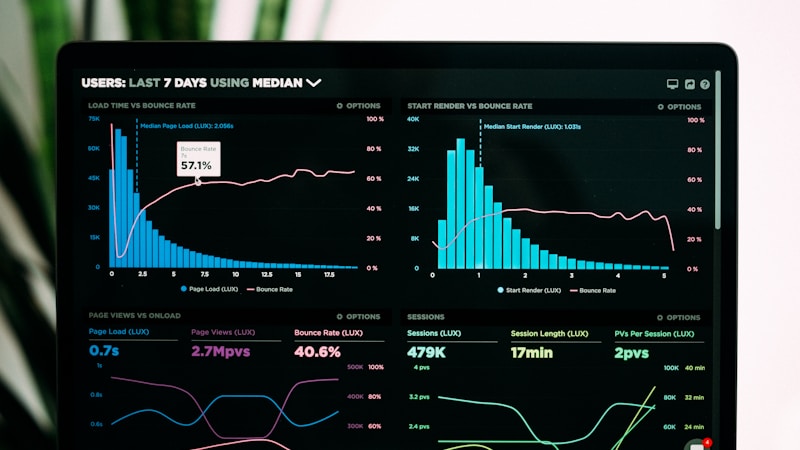
A coaching platform centralizes all management of your practice in one place.
The 8 essential features a coaching platform must have
Not all features that platforms sell are equally important for real coaching work. These are the eight you cannot miss:
1. Interactive session tools. The most differentiating feature, and curiously, the most absent in most platforms. These are the instruments you use live with the client: wheel of life, GROW model, life line, Eisenhower, DISC, custom diagnostics. Without them, the platform is just administrative management, not support for professional practice.
2. PDF with your brand. The client should be able to take home a document with the results of each session, with your logo, your colors and your name. Not a generic platform PDF. The ability to generate personalized PDFs is a professionalism signal that clients perceive and value directly.
3. Integrated client CRM. Client profiles with session history, tools used, current objectives, notes and follow-ups. Without integrated CRM, client management becomes a separate manual process again.
4. Progress tracking. The client needs to see how they are progressing. You need data to demonstrate the value of your work. A good platform records before/after metrics, evolution in areas worked and changes in diagnostics over time.
5. Customizable materials. Being able to adapt the tools, add your own questions, modify scales, or integrate your own methodology. The platform should serve your method, not impose one on you.
6. Browser access, no installation. Neither you nor your client should download anything. The best platforms work directly in the browser, on any device, without compatibility frictions or manual updates.
7. Works in your client's language. Your interface, your PDFs and your support should be in the language you and your client actually speak. A platform that leaves you translating on the fly adds friction that accumulates session by session.
8. Affordable pricing for independent coaches. Platforms designed for corporations can cost hundreds of dollars per month with user minimums. An independent coach needs an option that scales with their practice, not one that budgets it from the first client.
Comparison: 5 coaching platforms in Spanish
The market has very different options. This comparison is honest: some platforms are better at certain things, and we say so. What we want is for you to make the right decision for your specific case.
| Platform | Monthly price | Session tools | PDF with brand | Spanish | CRM |
|---|---|---|---|---|---|
| CoachPro Tools | $30 | +282 tools | Yes, with your logo | Yes (native) | Yes |
| ClassOnLive | ~$40 | No | Limited | Partial | Basic |
| CoachAccountable | $20–$80 | Limited | Partial | No (English) | Yes |
| Paperbell | $57 | No | No | No (English) | Basic |
| Simple Practice | $29–$99 | No | Yes | No (English) | Yes |
Some important clarifications about this comparison:
CoachAccountable is solid in client tracking and has a good CRM, but it's in English and its session tools are limited compared to a platform specialized in that area. If your practice is primarily in English and CRM is your priority, it's an option to consider.
Paperbell excels in payment management, contracts, and scheduling. If you already have your own session tools and just need the administrative part, it works well. But it has no interactive session tools.
Simple Practice comes from the world of clinical psychology and mental health. It's very good for structured clinical notes, but is not oriented to coaching as a development discipline nor has coaching-specific session tools.
CoachPro Tools is the only option on this list specifically designed for coaches, with the largest library of interactive session tools (+249), integrated CRM, and PDF generation with your brand, all in Spanish and from $30 per month.
Coaching platform vs LMS: which do you need?
This confusion comes up all the time. An LMS (Learning Management System) like Teachable, Hotmart, Thinkific or Kajabi is designed for one thing: to deliver pre-recorded online courses to an audience of students. The model is one-to-many, asynchronous, with videos, quizzes, and completion certificates.
A coaching platform is designed for the one-on-one model (or one-to-few in small groups), with live sessions, personalized diagnostics, longitudinal tracking of the individual client, and tools used in real time during the conversation.
The question that defines what you need is simple: is your main work teaching content or accompanying processes of change? If you teach, you need an LMS. If you coach, you need a coaching platform. If you do both things, courses and individual coaching, you probably need both, or a platform that covers the basics of both.
Coaching platform vs CRM + separate tools
Another frequent comparison: "can't I just use a generic CRM on one side and buy separate session tools on the other?" Technically yes. But there is a real cost to this approach that is worth calculating before choosing it.
The real cost of fragmenting tools
Imagine you build your stack with separate tools: Dubsado for CRM ($20/month), session tools downloadable or in PDFs (free but static), Calendly for scheduling ($12/month), a custom PDF generator ($15/month). You're at $47/month, similar to an integrated platform. But with four systems that don't share data, four learning curves, four different interfaces, and zero automation between them.
The cost is not just monetary. It's operational: each session requires you to manually coordinate what an integrated platform would do automatically. And when something fails in one of the four systems, you are the technical support for your own stack.
When fragmentation makes sense
That said, fragmenting can make sense in one case: when you already have a CRM you have invested months in configuring and client data, and you are just looking to complement it with session tools. In that scenario, adding interactive tools to your existing workflow is a reasonable decision.
How to choose the right platform for your type of practice
There is no single right platform for all coaches. The choice depends on three factors: what kind of sessions you work in, how many clients you manage, and in what language your practice operates.
If you are a life or wellness coach
You prioritize diagnostic tools (wheel of life, DISC, values test, life line) and a good emotional tracking system. You need professional PDFs to deliver as a session close. CoachPro Tools is especially suited for this profile because of the depth of its tool library.
If you are an executive or team coach
You need tools oriented to organizational results: SWOT, Eisenhower, priority management, 360 feedback, team roles. You also value integration with corporate tools your clients already use. The coaching software comparison goes deeper into this.
If you have a small practice (less than 10 clients)
You don't need the most complex platform on the market, but one that allows you to grow without changing systems. Choosing the right platform from the start saves you a painful migration when you have 20 clients and are too busy to do it.
If you work in more than one language
Language is not cosmetic. If your platform only exists in one language, every client who works in another one costs you: tools you translate on the spot, PDFs your client cannot read, support they cannot use. A platform that runs natively in English and Spanish removes that layer from every session.
You may also be interested in: online coaching platform: complete guide and CRM for coaches: the best options in 2026.
The platform coaches choose
+282 interactive tools + CRM + PDF with your brand, in English and Spanish, from $30 per month.
View plans →Frequently asked questions about coaching platforms
What's the difference between a coaching platform and an LMS?
An LMS (Learning Management System) is designed to deliver pre-recorded courses to students. A coaching platform is designed to manage live sessions, client tracking and diagnostic and development tools. They are tools with different purposes: one is for asynchronous teaching, the other is for active coaching support.
Can I use the platform for both online and in-person sessions?
Yes. CoachPro Tools work in any browser, both in your shared screen during a video call and on a tablet or laptop during an in-person session. They require no installation or special configuration by your client.
Do my clients need to create an account to access sessions?
No. In CoachPro Tools, the interactive tools are used by the coach during the session. The client does not need to register in any system. They can receive the results PDF via email with no access friction.
Does the platform include calendar and payment management?
It depends on the platform. CoachPro Tools includes a calendar with a public self-booking page, client CRM, video calls and PDF generation, all integrated natively, not as external connections to Calendly or Stripe. Billing is managed directly within the same account.
Is there a difference between "coaching platform" and "platform for coaches"?
Yes, though they are used interchangeably. "Coaching platform" sometimes refers to marketplaces where clients find coaches. "Platform for coaches" refers to work tools that the coach uses to manage their practice and their sessions. This article discusses the latter.
Related resources: interactive tools for coaches, CRM for coaches and online coaching platform.
Keep exploring
Related articles: